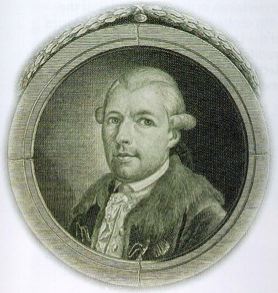
 Image via Wikipedia
The Illuminati (plural of Latin illuminatus, "enlightened") is a name given to several groups, both historical and modern,
and both real and fictitious. Historically, the name refers specifically to the Bavarian Illuminati, an
Enlightenment-erasecret society founded on May 1, 1776.
In modern times it is also used to refer to a purported conspiratorial organization which acts as a shadowy "power behind the
throne", allegedly controlling world affairs through present day governments and corporations, usually as a modern
incarnation or continuation of the Bavarian Illuminati. In this context, the Illuminati are believed to be the masterminds
behind events that will lead to the establishment of a New World Order.
Contents [hide]
1 History
2 Barruel and Robison
3 New England
Illuminati scare4 Modern Illuminati
5 Popular culture
6 Illuminati in conspiracy theory
7 References
8 Other Reading
9 External links
History
The movement was founded on May 1, 1776, in Ingolstadt (Upper Bavaria) as the Order of the Illuminati, with an initial
membership of five,[1] by Jesuit-taught
Adam Weishaupt (d. 1830),[2] who was the first lay professor of canon law at the
University of Ingolstadt.[3] The movement was made up of freethinkers as an offshoot of the Enlightenment, and seems to have
been modeled on the Freemasons.[4]
Originally Weishaupt had planned the order to be named the "Perfectibilists".[1] The group has also been called the Bavarian
Illuminati and the movement itself has been referred to as Illuminism. In 1777, Karl Theodor became ruler of Bavaria. He was
a proponent of Enlightened Despotism and, in 1784, his government banned all secret societies, including the Illuminati.
Many influential intellectuals and progressive politicians counted themselves as members, including Ferdinand of Brunswick
and the diplomat Xavier von Zwack, who was number two in the operation and was found with much of the group's literature when
his home was searched.[5] The Illuminati's members took a vow of secrecy and pledged obedience to their superiors. Members
were divided into three main classes, each with several degrees.
The order had its branches in most countries of the European continent; it reportedly had around 2,000 members over the span
of ten years.[3] The organization had its attraction for literary men, such as Johann Wolfgang von Goethe and Johann
Gottfried Herder, and even for the reigning dukes of Gotha and Weimar. Weishaupt modeled his group to some extent on
Freemasonry, and many Illuminati chapters drew membership from existing Masonic lodges. Internal rupture and panic over
succession preceded its downfall, which was effected by the Secular Edict made by the Bavarian government in 1785.[3]
According to J.M. Roberts, the March 2, 1785 edict "seems to have been deathblow to the Illuminati in Bavaria." Meanwhile,
Weishaupt had fled, and documents and internal correspondences, seized in 1786 and 1787, were subsequently published by the
government in 1787.[6]
Barruel and Robison
Between 1797 and 1798 Augustin Barruel's
Memoirs Illustrating the History of Jacobinism and John Robison's Proofs of a
Conspiracy both publicized the theory that the Illuminati had survived and represented an ongoing international conspiracy,
including the claim that it was behind the French Revolution. Both books proved to be very popular, spurring reprints and
paraphrases by others[7] (a prime example is Proofs of the Real Existence, and Dangerous Tendency, Of Illuminism by Reverend
Seth Payson, published in 1802).[8] Some response was critical, such as Jean-Joseph Mounier's On the Influence Attributed to
Philosophers,
Free-Masons, and to the Illuminati on the
Revolution of France.[citation needed]
New England Illuminati scare
Robison and Barruel's works made their way to the United States. Across New England, Reverend Jedidiah Morse and others
sermonized against the Illuminati, their sermons printed, and the matter followed in newspapers. The concern died down in the
first decade of the 1800s, though had some revival during the
Anti-Masonic movement of the 1820s and 30s.[1]
Modern Illuminati
Main article:
New World Order (conspiracy theory)Writers such as Mark Dice,[9] David Icke, Texe Marrs, Ryan Burke, Jüri Lina and Morgan Gricar have argued that the Bavarian
Illuminati survived, possibly to this day. Many of these theories propose that world events are being controlled and
manipulated by a secret society calling itself the Illuminati.[10][11] Conspiracy theorists have claimed that many notable
people were or are members of the Illuminati. Presidents of the United States are a common target for such claims.[12][13]
In addition to the shadowy and secret organization, several modern fraternal groups claim to be the "heirs" of the Bavarian
Illuminati and have openly used the name "Illuminati" in founding their own rites. Some, such as the multiple groups that
call themselves some variation on "The Illuminati Order,"[14][15] use the name directly in the name of their organization,
while others, such as the Ordo Templi Orientis, use the name as a grade of initiation within their organization.
Popular culture
Main article: Illuminati in popular culture
The Illuminati are a recurring theme in popular culture. References to such an organization appear in many fictional works
across many genres, appearing in novels like The Illuminatus! Trilogy by Robert Shea and Robert Anton Wilson, Dan Brown's
Angels & Demons, The Fallen Angels by Susannah Kells & Bernard Cornwell, and The Illuminati by Larry Burkett; in films like
Lara Croft: Tomb Raider, on television as in the Disney animated television show Gargoyles; in video games such as Deus Ex;
in comic book series like New Avengers: Illuminati; as well as in both trading card and roleplaying games like
Götterdämmerung.[16]
Illuminati in conspiracy theory
A key figure in the conspiracy theory movement, Myron Fagan, devoted his latter years to finding evidence that a variety of
historical events from Waterloo, The French Revolution,
President John F. Kennedy's assassination and the communist plot to
hasten the New World Order by infiltrating the Hollywood film industry, were all orchestrated by the Illuminati.[17] [18]
It is to be noted that the main groundswell of interest in the Illuminati and the assertions that it exists today began after
the publication of
The Illuminatus trilogy, written in the 1970s by two then Playboy associate editors, Robert Shea and
Robert Anton Wilson[19].[20] A post-modern science fiction work, the trilogy looked at the Illuminati's plot to rule the
world, whilst fighting opposition.
Modern theorists have incorporated these fictional ideas, with ever more bizarre twists. One Dr. John Coleman in "Targets of
the Illuminati and the Committee of 300[21]" asserts that the Illuminati's intentions include: [22] [23]
The establishment of a One World Government with a unified church and monetary system.
Further advancement of ideas through mind control.
Legalization & encouragement of the use of drugs and pornography.
Suppression of all scientific advancement unless they considered it acceptable to their aims.
To cause a total collapse of the world's economies and engender total political chaos.
To take control of all Foreign and domestic policies of the United States.
To keep people everywhere from deciding their own destinies by means of one created crisis after another and then managing
such crises.
To weaken the (moral fiber) of the nation and to demoralize workers in the (labor class) by creating mass unemployment.
The utter destruction of all national identity and national pride.
Fracturing of the nuclear family by encouraging teenagers to rebel.
Use and promotion of rock music to facilitate this rebellion which include rock gangsters such as the Rolling Stones.
The destruction of religions.
An end to all industrialization and the production of nuclear generated electric power in what they call "The Post-Industrial
Zero-Growth Society".
Penetrate and subvert all governments, and work from within them to destroy the sovereign integrity of nations represented by
them.
Organize a world-wide terrorist apparatus and negoti- ate with terrorists whenever terrorist activities take place.
Take control of education in America with the intent and purpose of utterly and completely destroying it.
To press for the spread of religious cults such as the Moslem Brotherhood, Moslem fundamentalism, the Sikhs, and to carry out
experiments of the Jim Jones and Son of Sam type of murders.
To export "religious liberation" ideas around the world so as to undermine all existing religions but more especially the
Christian religion.
Depopulation of large cities according to the trial run carried out by the Pol Pot regime in Cambodia. Pol Pot's (genocidal
plans)were drawn up in the United States by one of the Club of Rome's research foundations.
To give the fullest support to supranational institutions such as the United Nations(UN), The International Monetary Fund
(IMF), The Bank of International Settlements(BIS), The World Court and, as far as possible, make local institutions of lesser
effect by gradually phasing them out or bringing them under the mantle of the United Nations.
Cause by means of limited wars in the advanced countries, and by means of starvation and diseases in Third World countries,
the death of 3 billion people by the year 2000 & the population of the United States is to be reduced by 100 million by the
year 2050. The Committee of 300 commissioned Cyrus Vance to write a paper on this subject of how best to bring about such
genocide. The paper was produced under the title the "Global 2000 Report" and was accepted and approved for action by
President Carter, for and on behalf of the U.S. Government, and accepted by Edwin Muskie, then Secretary of State, Under the
terms of the (Global 2000 Report).